Bucket Elevators for Asphalt Plants in Saudi Arabia | AEME
How Heat-Resistant Bucket Elevators Improve Aggregate Transportation, Plant Efficiency and Equipment Reliability
In asphalt production, efficient material handling is essential for maintaining consistent operations, reducing unnecessary delays and ensuring a smooth production process. Every stage of aggregate transportation plays an important role, particularly when hot materials must be moved between different levels of the plant.
One of the most important pieces of equipment used for this purpose is the bucket elevator.
Bucket elevators are designed to transport bulk materials vertically, helping industrial plants move aggregates from lower processing areas to elevated storage or mixing units. In asphalt plants, these systems are particularly important for transferring hot aggregates from the dryer drum to the next stage of production.
At Asphalt Equipment Maintenance Establishment (AEME), we provide durable bucket elevator systems for asphalt plants, with solutions also available for concrete and other bulk-material applications. Our services include complete equipment supply, heat-resistant bucket designs, chain and belt drive options, spare parts, component upgrades, maintenance and repair support.
In this guide, we explore how bucket elevators work, their role in asphalt production, important equipment features, common maintenance challenges and practical ways to support long-term performance.
1. What Is a Bucket Elevator?
A bucket elevator is a mechanical conveying system designed to move bulk materials vertically between different elevations.
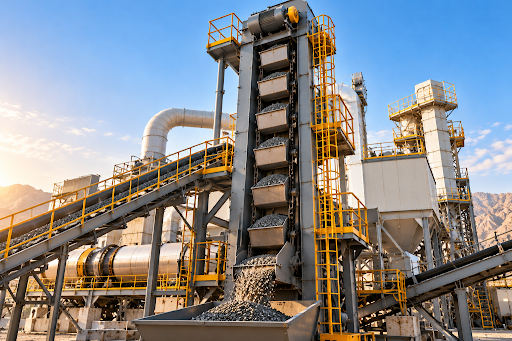
The equipment typically consists of a series of buckets attached to a moving chain or belt inside an enclosed structure.
As the system operates, the buckets collect material from a lower section, carry it upward and discharge it at the required elevation.
Bucket elevators are widely used in industrial applications where vertical material movement is necessary.
In asphalt plants, they are commonly used to transport heated aggregates from the dryer drum toward elevated processing or mixing equipment.
Main Components of a Bucket Elevator
A typical bucket elevator system may include:
- Buckets: Carry aggregates or other bulk materials vertically.
- Chain or Belt: Moves the buckets through the elevator.
- Drive System: Provides the mechanical power required for operation.
- Head Section: Houses the upper discharge area and associated components.
- Boot Section: Receives material at the lower end of the elevator.
- Elevator Casing: Encloses the moving components and material flow.
- Bearings and Shafts: Support the movement of rotating equipment.
The exact design and components depend on the elevator configuration and application.
2. Why Bucket Elevators Are Important in Asphalt Plants
Asphalt production requires aggregates to pass through several stages before mixing with bitumen.
After aggregates are heated and dried, they must be transferred efficiently to the appropriate elevated processing equipment.
A bucket elevator performs this vertical transportation function.
Without a reliable material handling system, interruptions in aggregate movement can affect the continuity of plant operations.
Efficient Vertical Transportation
Bucket elevators move bulk materials between different plant levels without requiring extensive horizontal conveying arrangements.
Reduced Material Spillage
Properly designed and maintained systems help contain material during vertical transportation, reducing unnecessary losses.
Continuous Material Flow
A reliable bucket elevator supports the movement of aggregates between connected production stages.
Space-Efficient Equipment Arrangement
Vertical conveying systems can help industrial plants use available space more effectively.
Improved Operational Coordination
Consistent material transportation supports the coordination of drying, conveying, storage and mixing activities.
For asphalt plant operators, reliable bucket elevator performance is an important part of maintaining smooth production.
3. Heat-Resistant Bucket Elevators for Hot Aggregates
Hot aggregate transportation presents demanding operating conditions.
Materials leaving an asphalt dryer drum may be at elevated temperatures, requiring equipment components that are suitable for the intended application.
At AEME, our bucket elevators are designed with heat-resistant materials and wear-resistant buckets to support operation under challenging industrial conditions.
Why Heat Resistance Matters
Elevated operating temperatures can affect the performance and service life of unsuitable conveying components.
Using materials designed for the expected operating conditions helps reduce the risk of premature component deterioration.
Wear-Resistant Bucket Design
Bucket elevators repeatedly handle abrasive aggregates.
Over time, continuous contact with material can cause wear to the buckets and related components.
Wear-resistant bucket construction helps support durability under demanding operating conditions.
Continuous Industrial Operation
Bucket elevators are often required to operate alongside other production equipment for extended periods.
Proper equipment selection, installation and maintenance help support dependable performance.
4. Chain Drive vs. Belt Drive Bucket Elevators
Bucket elevators can use different conveying arrangements depending on the material, temperature, capacity and operating requirements.
AEME offers chain and belt drive options as part of its bucket elevator solutions.
Chain Drive Bucket Elevators
Chain-driven systems use a mechanical chain arrangement to move the buckets.
They are commonly considered for demanding applications where the operating conditions require a suitable heavy-duty conveying system.
Potential characteristics include:
- Robust mechanical construction
- Suitability for selected heavy-duty applications
- Ability to accommodate appropriate bucket configurations
- Application-specific performance under demanding conditions
Belt Drive Bucket Elevators
Belt-driven systems use a continuous belt to carry the buckets through the elevator.
They may be suitable for applications where material characteristics and operating conditions are compatible with the selected belt construction.
Potential characteristics include:
- Continuous vertical conveying
- Application-specific operating efficiency
- Different available bucket and belt configurations
- Suitability for selected bulk-material handling applications
Which System Is Better?
There is no single solution that is ideal for every industrial plant.
The selection should consider:
- Material type and abrasiveness
- Operating temperature
- Required handling capacity
- Elevator height
- Available installation space
- Maintenance requirements
- Equipment compatibility
For hot aggregate applications, temperature suitability is especially important when selecting the conveying arrangement.
A technical assessment can help determine the appropriate option.
5. Common Bucket Elevator Problems and Their Causes
Like other industrial conveying equipment, bucket elevators are exposed to mechanical stress, abrasive materials and continuous operation.
Without appropriate inspection and maintenance, equipment performance may deteriorate.
Bucket Wear or Damage
Repeated contact with abrasive aggregates can gradually wear down bucket surfaces.
Damaged buckets may affect material handling efficiency and should be inspected and replaced when necessary.
Chain or Belt Misalignment
Incorrect tracking or alignment can contribute to uneven wear and operational problems.
Routine inspections help identify abnormal movement before it develops into a more serious issue.
Material Blockages
Material accumulation or unsuitable feeding conditions may interfere with normal conveying operations.
Maintaining appropriate material flow helps reduce the likelihood of blockages.
Bearing Problems
Bearings support rotating components and may experience wear or overheating when lubrication, alignment or operating conditions are unsuitable.
Excessive Vibration or Noise
Unusual vibration or mechanical noise may indicate wear, loose components, alignment problems or other equipment issues.
Such conditions should be investigated by qualified maintenance personnel.
Premature Component Failure
Inadequate maintenance, unsuitable replacement parts or operation outside equipment specifications can contribute to premature wear.
Identifying these issues early helps protect the equipment and reduce unnecessary downtime.
6. Preventive Maintenance Tips for Bucket Elevators
Preventive maintenance is essential for maintaining the performance and service life of industrial bucket elevators.
A structured inspection program helps operators identify developing problems and plan maintenance activities before major failures occur.
Daily Equipment Checks
Operators should observe the equipment for:
- Unusual noise or vibration
- Visible material leakage
- Abnormal operating conditions
- Signs of blockages
- Unexpected changes in material flow
Regular Bucket Inspections
Buckets should be inspected for wear, cracking, deformation and damaged connections.
Worn or damaged components should be replaced according to the equipment manufacturer’s recommendations.
Chain and Belt Inspection
The conveying arrangement should be checked for appropriate condition, tension and alignment.
Inspection requirements depend on the specific equipment design.
Bearing and Drive Maintenance
Bearings, drive components and related mechanical assemblies should be maintained according to the manufacturer’s instructions.
Use the specified lubrication products and maintenance intervals.
Cleaning and Material Accumulation
Material buildup should be addressed through appropriate cleaning and maintenance procedures.
Accumulated material can interfere with normal equipment operation.
Scheduled Technical Inspections
Periodic inspections by qualified technicians can help identify component wear, alignment issues and other developing mechanical problems.
Safety Note: Before inspection, cleaning or repair, equipment must be safely isolated and applicable lockout/tagout procedures followed. Maintenance should be performed by authorized personnel.
7. How Bucket Elevator Maintenance Helps Reduce Plant Downtime
An unexpected bucket elevator failure can interrupt material transportation between production stages.
Because the elevator forms part of an interconnected plant system, a conveying problem may affect other equipment and production activities.
Preventive maintenance helps reduce the risk of avoidable interruptions.
Early Identification of Wear
Regular inspections allow maintenance teams to identify deteriorating components before they cause major equipment problems.
Better Spare Parts Planning
Keeping suitable replacement components available can reduce delays when maintenance or repairs become necessary.
Improved Equipment Reliability
Correct alignment, suitable lubrication and timely component replacement support reliable operation.
Reduced Emergency Repairs
Planned maintenance can help reduce dependence on unexpected corrective work.
Long-Term Equipment Protection
Consistent maintenance supports the durability of buckets, conveying components and drive assemblies.
For industrial plant owners, a well-maintained bucket elevator can contribute to more predictable operations and better maintenance planning.
8. When Should You Repair or Upgrade a Bucket Elevator?
Not every equipment problem requires complete replacement.
In many situations, maintenance or component upgrades may help restore appropriate operating performance.
However, the correct decision depends on equipment condition, age, operating requirements and the extent of damage.
Signs That an Inspection or Upgrade May Be Needed
- Repeated mechanical breakdowns
- Excessive bucket wear
- Frequent chain or belt problems
- Unusual vibration
- Material handling inefficiencies
- Increasing maintenance requirements
- Difficulty obtaining compatible replacement components
A qualified technical assessment can help determine whether repair, component replacement or a larger upgrade is appropriate.
At AEME, we provide spare parts, component upgrades, maintenance and repair support for bucket elevator systems.
9. Choosing the Right Bucket Elevator for Your Plant
Selecting a bucket elevator requires an understanding of both material characteristics and plant operating requirements.
Important considerations include:
Material Characteristics: The size, density, abrasiveness and flow behavior of the material being transported.
Operating Temperature: The temperature range the elevator components must withstand.
Handling Capacity: The amount of material the system must transport under the intended operating conditions.
Vertical Lift Height: The distance between the material intake and discharge points.
Drive Configuration: The suitability of a chain or belt system for the application.
Equipment Durability: The construction and wear resistance of buckets and other components.
Maintenance Accessibility: The ability to inspect, maintain and replace components safely.
System Compatibility: Integration with the plant’s existing material handling and processing equipment.
Correct equipment selection helps support efficient material movement and long-term operational reliability.
10. Why Choose AEME for Bucket Elevator Solutions?
At Asphalt Equipment Maintenance Establishment, we understand the demanding material handling requirements of asphalt plants and other industrial facilities.
Our bucket elevator solutions are designed to support reliable vertical transportation, equipment durability and smooth plant operations.
Our Bucket Elevator Services Include:
- Supply of Complete Bucket Elevator Systems — Complete solutions for industrial vertical material handling.
- Heat-Resistant and Durable Bucket Design — Equipment designed for demanding temperature and wear conditions.
- High-Capacity Vertical Material Handling — Systems intended to support efficient bulk-material transportation.
- Chain and Belt Drive Options — Different configurations according to application requirements.
- Spare Parts and Component Upgrades — Replacement components and upgrade support.
- Maintenance and Repair Support — Technical services to help maintain reliable equipment operation.
Our focus is on providing practical industrial equipment solutions that help businesses reduce unnecessary interruptions and maintain efficient material handling.
11. Frequently Asked Questions (FAQs)
Q1. What is the main function of a bucket elevator in an asphalt plant?
A bucket elevator transports hot aggregates vertically from the dryer drum toward elevated processing, storage or mixing equipment.
Q2. Are bucket elevators suitable for hot materials?
Yes. Bucket elevators designed with appropriate heat-resistant components can be used for hot material handling. The system must be selected according to the actual operating temperature and material requirements.
Q3. What is the difference between chain and belt bucket elevators?
Chain bucket elevators use chains to move the buckets, while belt bucket elevators use a continuous belt. The appropriate configuration depends on the material, temperature, capacity and equipment design.
Q4. What causes bucket elevator failure?
Common contributing factors include component wear, poor alignment, inadequate lubrication, unsuitable operating conditions, blockages and insufficient preventive maintenance.
Q5. How often should a bucket elevator be inspected?
Inspection frequency depends on operating conditions, equipment design and manufacturer recommendations. Routine checks and scheduled technical inspections are important for reliable performance.
Q6. Can bucket elevator components be replaced without replacing the entire system?
In many cases, individual components can be repaired or replaced, depending on the condition and design of the equipment.
Q7. Does AEME provide bucket elevator spare parts and maintenance?
Yes. AEME offers spare parts, component upgrades, maintenance and repair support, along with complete bucket elevator systems.
Q8. Can bucket elevators be used in concrete plants?
Yes. Bucket elevator systems can be used for selected concrete and other bulk-material handling applications when the equipment is designed for the intended material and operating conditions.
Contact AEME today to discuss your bucket elevator requirements.
Service Page: https://asphaltequip.com/services/bucket-elevator/
Related Service — Dryer Drum: https://asphaltequip.com/services/dryer-drum/
Website: https://asphaltequip.com/
Phone: +966 555 277 458
Email: info@asphaltequip.com