
Industrial Plant Automation & SCADA Systems in Saudi Arabia | AEME
How Industrial Automation, SCADA Integration and Real-Time Monitoring Can Improve Plant Efficiency
Industrial plants depend on accurate coordination between equipment, control systems and production processes. In asphalt, concrete and crusher plants, managing these operations efficiently is essential for maintaining productivity, monitoring performance and reducing unnecessary interruptions.
As industrial operations become more complex, automation and computer systems play an increasingly important role in simplifying plant management.
From monitoring production data to controlling equipment and generating operational reports, modern industrial automation helps plant operators manage critical processes through integrated digital systems.
In this guide, we explore how industrial automation works, its benefits, the technologies involved and why integrated control systems are important for efficient plant operations.
At Asphalt Equipment Maintenance Establishment (AEME), we provide automation and computer system solutions tailored to asphalt, concrete and crusher plants. Our services include plant automation systems, SCADA integration, industrial control systems, remote monitoring, data acquisition and custom software solutions.
1. What Are Industrial Automation and Computer Systems?
Industrial automation involves using computerized control technologies to monitor and manage machinery, equipment and production processes with reduced dependence on manual intervention.
In industrial plants, automation systems can connect different operational components through a centralized control interface.
Depending on the plant configuration, these systems may help operators monitor equipment status, manage process sequences, review production information and respond to operating conditions.
Computer-based control systems are particularly useful in facilities where multiple machines must work together.
For asphalt, concrete and crusher plants, automation can help create a more organized, consistent and efficient production environment.
2. Why Automation Matters for Industrial Plants
Manual plant operation often requires continuous coordination between different equipment systems and operators.
As production demands increase, maintaining accurate control across multiple processes can become more challenging.
Integrated automation systems help simplify these activities by improving access to operational information and supporting coordinated equipment control.
Improved Operational Efficiency
Automation can reduce repetitive manual tasks and help coordinate production activities more effectively.
This allows operators to focus on monitoring plant performance and managing operational requirements.
Real-Time Performance Monitoring
Computer systems can provide access to current equipment and process information.
This helps operators identify unusual conditions and make more informed operational decisions.
Reduced Operational Interruptions
When relevant equipment information is available through an integrated system, operators may be able to identify certain issues earlier.
Timely monitoring and appropriate maintenance responses can help reduce avoidable downtime.
Better Process Consistency
Automated sequences can help maintain repeatable operating procedures, provided equipment is correctly configured, calibrated and maintained.
Improved Reporting and Decision-Making
Digital data collection and reporting tools can make it easier to review production activities, analyze operating trends and support management decisions.
3. Automation Systems for Asphalt Plants
Asphalt plants contain several interconnected production systems that must operate in a coordinated sequence.
These may include aggregate feeding, drying, heating, weighing, bitumen handling, mixing and material discharge.
A computer-based automation system can provide operators with a centralized interface for monitoring and controlling relevant production stages.
Aggregate Feeding and Material Control
Aggregate feeding systems supply material to the plant according to production requirements.
Automation can help coordinate feeder operation and display relevant equipment status or process information.
Dryer and Burner Monitoring
Dryer and burner systems are important components of asphalt production.
Where supported by the installed equipment and control configuration, automation can help monitor selected operating parameters and equipment conditions.
Material Weighing and Batching
Accurate material measurement is essential for consistent asphalt production.
Integrated control systems can coordinate weighing and batching sequences using configured production recipes and equipment inputs.
Bitumen Handling and Mixing
Automated controls can support the coordination of bitumen delivery and mixing operations.
Operators may be able to review relevant process information through the computer interface.
Production Data and Reporting
Digital systems can collect operational data and generate reports based on the information available from connected equipment.
These records can support production monitoring and operational analysis.
AEME provides plant automation and computer system solutions designed around the specific requirements of asphalt plant operations.
4. Automation Solutions for Concrete Batching Plants
Concrete batching plants depend on coordinated material measurement, mixing and discharge operations.
Computer-based control systems can help manage these processes through configured operating sequences.
Depending on the installed system, automation may support:
- Aggregate and material weighing
- Batching sequence control
- Recipe management
- Mixer operation monitoring
- Production data recording
- Operational reporting
Integrated automation can help operators monitor production activities and maintain more consistent process control.
However, reliable performance also depends on equipment condition, sensor accuracy, correct calibration and proper system configuration.
5. Automation and Monitoring for Crusher Plants
Crusher plants operate through multiple interconnected equipment systems responsible for material handling and size reduction.
These facilities may include feeders, crushers, conveyors and screening equipment.
Industrial automation can help coordinate relevant equipment and provide centralized monitoring of selected operating conditions.
Equipment Status Monitoring
Control systems can display operating information from connected equipment, helping operators review system status.
Conveyor and Feeder Coordination
Automated control sequences can support coordinated operation between feeding and material transportation systems.
Process Monitoring
Where appropriate sensors and control devices are installed, operators can monitor selected process conditions and equipment signals.
Operational Reporting
Data acquisition tools can help record available equipment and production information for review.
For crusher plant operators, an appropriately designed automation system can support better visibility and coordination across the production process.
6. Understanding SCADA Integration in Industrial Plants
SCADA stands for Supervisory Control and Data Acquisition.
It is a technology used to supervise industrial processes, collect operational data and provide control and monitoring functions.
SCADA systems commonly work with connected control devices, sensors and communication networks.
A SCADA interface can help operators visualize selected equipment and process information through a computer screen.
Key Functions of SCADA Systems
Centralized Monitoring: View information from connected equipment through a supervisory interface.
Data Acquisition: Collect process signals and operational information from supported devices.
Process Visualization: Display equipment status, process values and relevant system information.
Alarm Monitoring: Present configured alarms or abnormal operating conditions.
Historical Data: Store and review selected operating information when the system supports data logging.
Supervisory Control: Allow authorized operators to perform configured control functions.
The actual capabilities depend on the equipment, software, network architecture and system design.
At AEME, SCADA integration is one of the services offered as part of our industrial automation and computer system solutions.
7. Industrial Control Systems and Their Role in Plant Operations
Industrial control systems provide the foundation for managing automated equipment and production processes.
These systems connect control hardware, field devices and software interfaces to coordinate machine operations.
A typical industrial control environment may include programmable controllers, sensors, control panels, communication equipment and operator interfaces.
Programmable Logic Controllers (PLCs)
PLCs are industrial computers used to execute programmed control instructions.
They can receive signals from connected devices and control equipment according to the configured logic.
Human-Machine Interfaces (HMIs)
An HMI provides a visual interface through which operators can monitor information and interact with supported equipment controls.
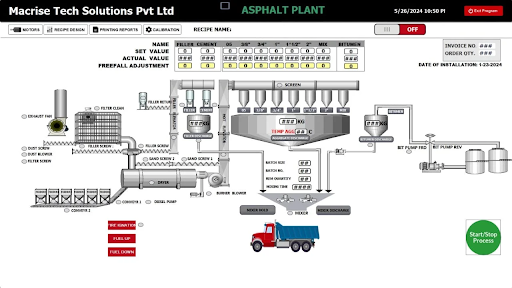
The asphalt plant dashboard shown in AEME’s service material is an example of a computer-based plant control interface.
It visually represents equipment and processes such as aggregate feeding, material weighing, the dryer, mixer, bitumen system and related controls.
Sensors and Field Devices
Sensors provide information about selected physical or process conditions.
The available measurements depend on the instruments installed at the plant.
Control Panels and Communication Systems
Control panels and industrial communication systems connect equipment and control devices.
Proper integration helps different components exchange the information required for coordinated operation.
8. Remote Monitoring and Control Solutions
Remote monitoring allows authorized personnel to review supported plant information without always being physically present at the equipment.
Depending on the system configuration, remote access may provide visibility into equipment status, operating parameters and production information.
Remote control capabilities require additional safeguards, suitable communication infrastructure and appropriate authorization.
Potential Benefits of Remote Monitoring
- Better visibility into supported equipment status
- Faster access to selected operational information
- Improved coordination between technical teams
- Easier review of recorded system data
- Support for troubleshooting and maintenance planning
Remote access should be implemented with appropriate cybersecurity measures, user permissions and operational safety controls.
AEME offers remote monitoring and control solutions tailored to plant requirements.
9. Data Acquisition and Reporting Tools
Industrial plants generate operational information that can be useful for production planning, maintenance and performance analysis.
Data acquisition systems collect available signals and records from connected equipment.
Reporting tools then organize this information into formats that support operational review.
Depending on the system configuration, reports may include:
- Production records
- Material measurement data
- Equipment operating information
- Process values
- Alarm and event records
- Selected operational trends
Reliable reporting depends on accurate source data, correctly configured equipment and appropriate record management.
By improving access to operational information, plant operators can make more informed decisions.
10. Custom Software Solutions for Plant Operations
Industrial facilities do not always have identical operating requirements.
Differences in equipment, production processes, control hardware and reporting needs may require customized software solutions.
Custom industrial software can be developed or configured to support specific plant workflows and equipment arrangements.
Depending on project requirements, customization may involve:
- Operator interface design
- Equipment control logic
- Production sequence configuration
- Data visualization
- Reporting functions
- Integration with compatible plant systems
At AEME, custom software solutions for plant operations form part of our automation and computer system service offering.
The appropriate solution depends on the plant’s technical requirements and existing equipment.
11. Important Considerations Before Upgrading Plant Automation
Before introducing or upgrading an industrial automation system, businesses should assess their current equipment and operational requirements.
Existing Equipment Compatibility
The automation system should be evaluated against the plant’s existing control hardware, sensors, electrical infrastructure and communication interfaces.
Operational Requirements
Plant owners should identify the processes they need to monitor, automate or improve.
System Reliability
Industrial control systems must be designed for the conditions in which they operate.
Operator Training
Personnel should understand the system interface, operating procedures and relevant safety requirements.
Maintenance and Technical Support
Regular inspection, appropriate software management and technical support are important for long-term system performance.
Cybersecurity and Access Control
Connected industrial systems should use appropriate security measures, including controlled access, network protection and suitable backup procedures.
Careful assessment helps businesses select an automation solution that matches their actual plant requirements.
12. Why Choose AEME for Automation and Computer Systems?
At Asphalt Equipment Maintenance Establishment, we understand that efficient industrial operations depend on the coordination of mechanical equipment, electrical systems and computerized controls.
We provide integrated automation solutions tailored to the requirements of asphalt, concrete and crusher plants.
Our Automation Services Include:
- Plant Automation Systems — Solutions for automating critical plant processes.
- SCADA Integration — Supervisory monitoring and data acquisition integration.
- Industrial Control Systems — Computerized control solutions for plant operations.
- Remote Monitoring and Control — Remote visibility and control solutions according to system requirements.
- Data Acquisition and Reporting Tools — Operational data collection and reporting capabilities.
- Custom Software Solutions — Software tailored to specific plant workflows.
Our objective is to help industrial businesses simplify operations, improve process visibility and support efficient plant management.
13. Frequently Asked Questions (FAQs)
Q1. What is an industrial plant automation system?
An industrial plant automation system uses control hardware and software to coordinate, monitor and manage equipment and production processes with reduced manual intervention.
Q2. Can asphalt plants operate using computer-based control systems?
Yes. Asphalt plants can use computer-based control systems to manage supported production sequences, monitor equipment and display relevant operational information.
Q3. What is the difference between SCADA and PLC?
A PLC typically executes programmed control logic for connected equipment, while SCADA provides supervisory monitoring, visualization and data acquisition functions across supported systems.
Q4. Can existing concrete and crusher plants be upgraded with automation?
Some existing plants can be upgraded, depending on their equipment condition, control hardware, communication capabilities and technical requirements. A compatibility assessment is necessary before deciding on an upgrade.
Q5. Does automation eliminate the need for plant operators?
No. Automation can reduce certain manual activities, but trained operators and technical personnel remain important for supervision, maintenance, safety and operational decisions.
Q6. Does AEME provide remote monitoring solutions?
Yes. Remote monitoring and control solutions are included in AEME’s automation and computer system service offering.
Q7. Why is real-time monitoring important?
Real-time monitoring helps operators review current equipment and process information, identify certain abnormal conditions and make timely operational decisions.
Contact AEME to discuss your industrial plant automation requirements.
Service Link: https://asphaltequip.com/services/automation-and-computer-system/
Website: https://asphaltequip.com/
Phone: +966 555 277 458
Email: info@asphaltequip.com